Listen
Liner note
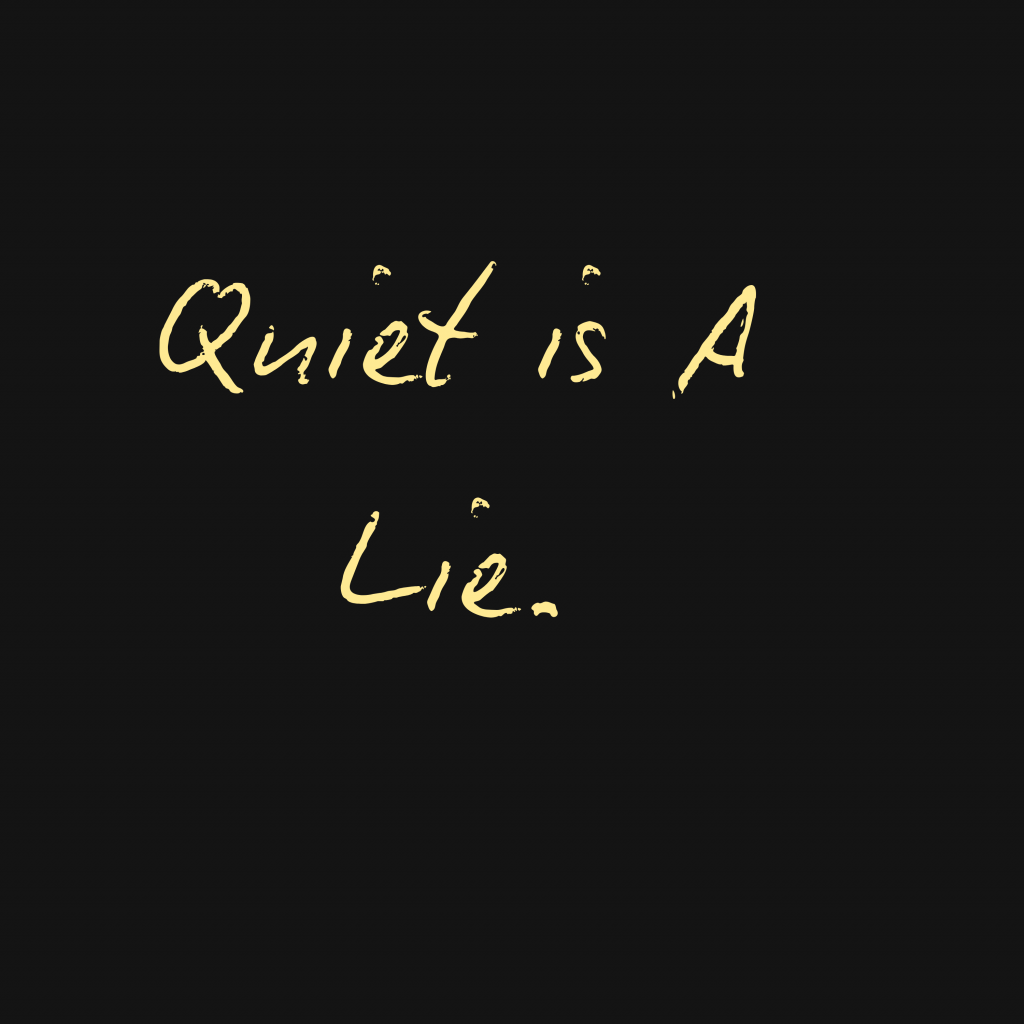
Quiet Is A Lie was built as more than a collection of songs. It is a signal system. Each track stands independently, but each one also opens into a wider emotional and thematic world. Across the album, MUSIATA moves through love, displacement, memory, class pressure, race, digital distortion, family fracture, interior survival, and the search for something real in a culture that rewards performance over presence.
The title is the thesis. Quiet is not peace. Quiet is not absence. Quiet can be suppression, calculation, politeness, fear, distance, disguise, or endurance. Again and again, this album returns to the tension between what is felt and what is shown, what is true and what is managed, what is deeply human and what gets shaped by systems larger than the individual. Some songs sit close to the skin, dealing with intimacy, heartbreak, longing, or private reckoning. Others widen the lens, tracing the hidden architecture beneath everyday life—history, control, migration, identity, and the coded pressure of the modern world. Together, they create a record that is both personal and archival.
Musically, the project is designed to feel cinematic, soulful, and deliberate. The writing leans into image, tension, atmosphere, and recurrence. Certain themes echo across songs like returning rooms: the fire that warms and disappears, the road, the redline, the wire beneath the surface, the signal in the static, the body carrying memory even when language fails. This is why Quiet Is A Lie can be heard in layers. A listener can enter through a single track and still feel something complete. But when the songs are heard together, deeper links begin to emerge.
This album also lives in conversation with the broader MUSIATA world. The songs are not isolated products; they belong to a connected archive of books, reflections, mirrored narratives, and adjacent works. That larger structure is not required in order to understand the music, but it deepens the experience for those who step further inside it. In that sense, Quiet Is A Lie is both a finished album and a threshold—an invitation into a world where sound, text, memory, and signal are always speaking to one another.
Above all, Quiet Is A Lie is about staying human under pressure. It is about refusing false polish, listening for what survives beneath noise, and recognizing that even silence carries meaning. These songs do not chase perfection. They hold tension, contradiction, fracture, tenderness, and clarity in the same hand. That is where the album lives. That is where its truth begins.